Blocked Drain in Mongaguá: How to Get Help Fast
It is 7 p.m. on a Friday, the sink in your Mongaguá apartment is backing up, and the water is rising toward the floor. The first question most residents ask in the neighborhood groups is simple: who do I call, and what should I have ready before they arrive? The short answer is that you contact a local desentupidora Mongaguá service, describe the problem clearly, and avoid pouring chemicals down the drain while you wait.
This page is written as a moderator’s reply to the questions that keep coming back. It covers what a drain-clearing service actually does, how the call usually goes, what it costs, and the mistakes that turn a small blockage into a flooded kitchen.
What a Drain-Clearing Service in Mongaguá Actually Handles
The term covers more than one job. A technician may clear a single clogged sink, or may need to open a whole sewage line under a building. In a coastal city like Mongaguá, the mix of older homes, holiday rentals, and dense apartment blocks means the same crew can face very different pipes on the same day.
Most calls fall into a few recurring categories:
- Kitchen and bathroom drains clogged by grease, soap residue, hair, and food scraps.
- Floor drains and shower drains that overflow during rain or heavy use.
- Sewage lines blocked by roots, collapsed sections, or accumulated waste.
- Septic tanks that need pumping or inspection.
- Storm-water inlets near the street that back up after heavy rain.
When you call a desentupidora Mongaguá SP team, be specific about which fixture is failing. A sink that drains slowly is a different job from a toilet that gurgles when the shower runs. That detail decides which equipment the crew loads onto the truck.
How the First Call Usually Goes
The dispatcher will ask three things: the address, what is blocked, and whether water is currently overflowing. Answer honestly, even if it sounds messy. If the floor is already wet, say so, because the crew may prioritize you and bring extra pumps.
Expect to be asked whether the property is a house, an apartment, or a commercial site. Condominium calls often need the síndico or building manager to authorize access to shared pipes. If you rent, check whether your landlord has a preferred provider before you book.
What to Have Ready Before the Technician Arrives
Clear the area around the drain, move any mats or furniture, and keep pets in a separate room. If you know where the main cleanout or inspection cap is, point it out. Have a bucket and old towels on hand, and note the approximate time the problem started.
Do not keep running water to “test” whether the blockage cleared. Each flush adds volume to a line that is already full, and that is how a slow drain becomes a spill onto the floor.
Tools and Methods Used to Clear a Blockage
A professional crew rarely relies on a single tool. The choice depends on the pipe diameter, the material, and how far the obstruction sits from the access point.
Manual and Mechanical Clearing
For a simple sink or shower clog, a hand auger or drain snake can pull out hair and soap buildup. This is quick, low-cost, and often enough for a bathroom drain. For deeper blockages, a motorized auger with a longer cable reaches into the branch line.
Hydro Jetting
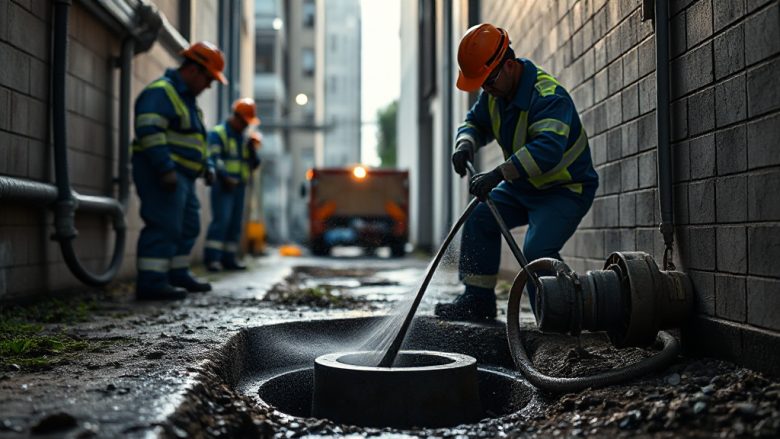
High-pressure water jetting is the standard method for grease, sand, and root intrusion in larger pipes. A hose with a specialized nozzle is fed into the line, and the water pressure scours the walls clean. It is more thorough than snaking but requires proper access and a technician who knows the pipe’s condition.
Septic Tank Pumping
Properties outside the main sewer network rely on septic systems. When the tank fills, drains throughout the house slow down at the same time. Pumping and inspecting the tank is a scheduled job, not an emergency fix, so it is worth planning before the busy season.
Ask the company which method they plan to use before work starts. A crew that explains the approach is usually the one that will also tell you if the pipe needs a camera inspection.
Typical Costs and What Changes the Price
Prices in Mongaguá vary by job, but the main cost drivers are consistent. The table below shows the usual factors and how they affect the final bill.
| Factor | Effect on Cost |
|---|---|
| Simple sink or shower clog | Lower, often a fixed call-out fee |
| Main sewage line or shared pipe | Higher, requires larger equipment |
| After-hours or weekend call | Emergency premium may apply |
| Septic tank pumping | Priced by tank size and access |
| Pipe repair after clearing | Separate charge if damage is found |
Ask for the call-out fee and the hourly or job rate separately. A reputable provider will confirm the price range before starting, and will tell you if the job turns out to be bigger than expected.
Be cautious with quotes that are far below the local average. In this trade, a very low price often means the crew will clear the immediate clog but skip the inspection that would reveal a cracked pipe or root intrusion.
Common Mistakes That Make Things Worse
The most frequent error is pouring chemical drain cleaner into a fully blocked line. Those products can damage older pipes and are hazardous to the technician who later opens the cleanout. If the drain is completely stopped, mechanical clearing is the safer route.
Another common mistake is flushing wipes, paper towels, or food scraps and assuming the line can handle it. Even products labeled flushable can accumulate and narrow the pipe over time. In coastal buildings, salt air and older metal pipes add another layer of wear, so prevention matters more than in newer inland developments.
Finally, avoid hiring an unmarked van that shows up without a company name or contact number. You want a provider you can call back if the same drain blocks again next month.
When to Call an Emergency Service Instead of Waiting
Some blockages can wait until morning. Others cannot. Call immediately if sewage is backing up into the property, if water is rising in more than one fixture, or if you smell gas or see water near electrical outlets.
If the blockage is in a shared building line, notify the building manager before the crew arrives. In a condominium, the responsibility for the pipe often sits with the building rather than the individual owner, and the paperwork is easier when everyone is informed from the start.
For a first-time caller, the simplest plan is to book a desentupidora em Mongaguá SP team that offers round-the-clock dispatch, describe the problem in plain terms, and keep the area clear until they arrive.
Preventing the Next Blockage
Once the drain is clear, a few habits keep it that way. Use a strainer in the kitchen sink and clean it weekly. Never pour cooking oil down the drain; collect it in a container and dispose of it with solid waste. In the bathroom, a hair catcher costs little and saves a lot of trouble.
For houses with septic systems, have the tank inspected on a regular schedule rather than waiting for a backup. For apartment residents, report slow drains to the building manager early. A drain that empties slowly is a warning, not a minor annoyance.
Your Next Step: Book the Visit and Ask Three Questions
If you are dealing with a blocked drain today, the practical move is to call and book a visit rather than keep troubleshooting on your own. Before you confirm, ask three questions: what the call-out fee includes, which clearing method the crew will use, and whether a follow-up inspection is available if the problem returns.
Write down the answers. If the same drain blocks again within a few weeks, that record helps the next technician find the real cause instead of repeating the same temporary fix. A clear description, a confirmed price, and a provider who explains the work are the three things that turn a stressful evening into a solved problem.